Consultancy Hire TOR: Climate Risk and Vulnerability Mapping for Nairobi, Kenya through DARAJA
Terms of Reference
Weather and Climate Information Services (WISER) Kenya Phase 2 – DARAJA.
Climate Risk and Vulnerability Mapping and Assessment for Kawangware, Korogocho, Mathare and Mukuru Informal Settlements, Nairobi, to Inform Weather and Climate Information Services and Early Action through DARAJA.
1. Resurgence
Resurgence is a global non-profit organisation specialising in urban climate risk and resilience. Operating across Africa, Asia, the Caribbean, and MENA, Resurgence delivers award-winning, community-driven approaches to weather and climate information services (WCIS) and early warning systems (EWS). Its flagship initiative, DARAJA, transforms how vulnerable urban communities access, understand, and act on forecasts.
DARAJA has been recognised with five international awards and consistently received A-grade evaluations from the Met Office Fund Manager.
Resurgence is the contract Lead for the WISER Kenya – DARAJA project implementation in Kenya, leading and overseeing implementation activities by CSO and NMHS partners in Nairobi and Mombasa, and providing support to ensure successful delivery and achievement of project outcomes and impact.
2. Kounkuey Design Initiative
Kounkuey Design Initiative (KDI) – Nairobi has been the implementing partner of DARAJA in Nairobi, Kenya, during its first and second phases. KDI led the co-design of a localised weather and climate information (WCI) communication system, oversaw its pilot implementation, and supported the re-design of the weekly weather forecast as well as the co-development of a new daily forecast for Nairobi.
In the second phase, KDI spearheaded the co-development of the first draft Early Action Plan for several informal settlements and contributed to city-wide early action planning efforts.
3. Kenya Meteorological Department
Kenya Meteorological Department (KMD) is the national meteorological service provider. KMD is a leader in Africa in high-quality meteorological services. KMD was a key DARAJA partner under WISER 2 and continues to be a key partner under WISER 3. KMD also has vast experience in working with the UK MO and other past and current WISER projects.
As the key NMHS delivery partner, KMD’s main role is to provide weather and climate information products, as well as facilitate and participate in activities to co-produce improved weather and climate information products and services, as well as dissemination activities.
4. WISER Kenya Phase 2 – DARAJA
DARAJA, which means bridge in Swahili, builds bridges and operational partnerships between the providers and users of weather and climate information (WCI), including early warnings, enabling people to act on forecasts and warnings to improve their climate resilience. Funded by the UK FCDO through the WISER programme led by the UK Met Office, the overarching objective of DARAJA is to reduce loss of life and improve the lives and livelihoods of vulnerable urban communities.
The WISER Kenya Phase 2 – DARAJA project aims to scale up access, understanding and use of weather and climate information services in Kenya’s urban areas. Implemented by Resurgence, Kounkuey Design Initiative and the Kenya Meteorological Department, in collaboration with communities and urban stakeholders, this phase of the project will focus on expanding the implementation of DARAJA into four new informal settlements in Nairobi, starting with a climate risk and vulnerability mapping and assessment of these four informal settlements.
5. Project Location
Nairobi (Kawangware, Korogocho, Mathare and Mukuru Informal Settlements), Kenya, East Africa.
6. Period of Performance
This assignment will commence on 26th January 2026 and terminate on 27th March 2026.
7. Contact Person
Pascal Mukanga, Project Manager – DARAJA – pascal@resurgence.io
8. Objectives
The Climate Risk and Vulnerability Mapping and Assessment Consultant shall collaborate with DARAJA delivery partners in Nairobi (KDI and KMD), and other city climate action actors to conduct climate risk and
vulnerability mapping and assessment for the four informal settlements where the WISER Kenya Phase 2 – DARAJA project is being implemented. The Consultant shall aim to achieve the following specific objectives;
- To enhance understanding of the climate-related shocks and stresses experienced in the six implementing informal settlements, including their city and settlement-level causes and drivers, as well as their disproportionate impacts, particularly on people and infrastructures.
- To identify and analyse the existing effective city and settlement-level actions to mitigate and adapt to the identified climate-related shocks and stresses, including the actors involved in these actions. mitigation measures.
- To develop graphic materials, including hazard and hotspot maps, risk-reducing infrastructure maps, photographs and diagrams for use by project delivery partners for communication with communities, city stakeholders and funding agencies.
9. Scope of Work
9.1 Scoping
- Conduct a stock take of recent and ongoing climate risk and vulnerability assessments in the four informal settlements to identify existing resources and data, and gaps, as well as opportunities for collaboration in the assessment.
- Prepare a summary of the existing resources, data and information, as well as the gaps and the description of the clear climate-related risks to be addressed through the climate risk and vulnerability
assessment.
9.2 Methodology
- Develop a mixed-methods,participatory and collaborative approach for the climate risk and vulnerability mapping and assessment, in consultation with the WISER Kenya Phase 2 – DARAJA project delivery partners.
- Collaborate with the WISER Kenya Phase 2 – DARAJA delivery team to prepare data collection tools, including focus group discussion guides, household survey questionnaires and maps, among others.
- Collaborate with the WISER Kenya Phase 2 – DARAJA project delivery partners to conduct training of community members and city stakeholders participating in data collection.
- Collaborate with the WISER Kenya Phase 2 – DARAJA delivery partners to coordinate data collection and data analysis activities across the six informal settlements.
- Collaborate with the WISER Kenya Phase 2 – DARAJA delivery partners, including the MEL team to mobilise city and settlement-level participation in the climate risk and vulnerability mapping and
assessment, ensuring inclusivity, gender sensitivity and equal representation.
9.3 Settlement Climate Risk and Vulnerability Mapping and Assessment
The following will be covered by the consultant in the climate risk and vulnerability mapping and assessment in the four settlements of Kawangware, Korogocho, Mathare and Mukuru;
- Vulnerability context in which hazards are translated into impacts, i.e., which populations, areas, groups, systems or sectors are most affected by climate hazards, and what are the drivers (e.g., social, economic, geographic, policy, etc.) of their vulnerability?
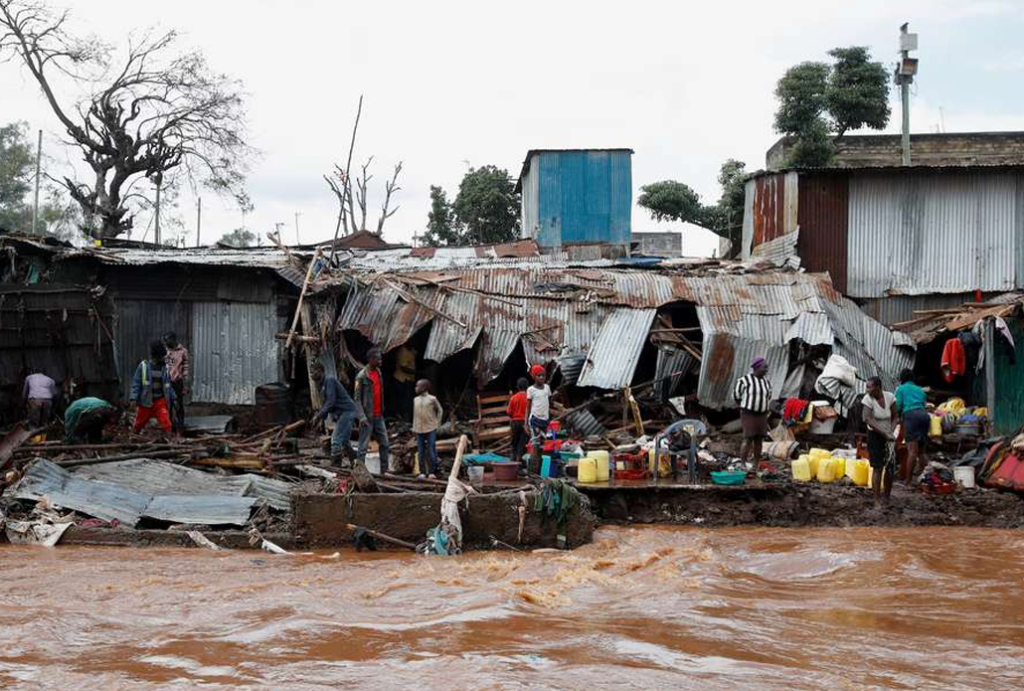
- Main climate hazards and their impacts currently experienced, including on population health, livelihoods, infrastructure and housing (e.g., heavy rainfall, flooding, destruction to infrastructure, etc.)
- The level(s) of adaptive capacity in the relevant populations, groups, systems, sectors, and institutions. What options are there for effective responses to manage and reduce existing risks, and what are the constraints that prevent action to reduce risk being taken.
- Recommendations to enhance resilience in the four informal settlements, based on an analysis of the potential future evolution of climate hazards (both sudden-onset and slow-onset); the potential future evolution of vulnerability; and the potential future evolution of adaptive capacity.
- Spatial mapping and visual representation of climate hazard and impact hotspots, with both quantitative and qualitative descriptions of extent of loss and damage.
9.4 Stakeholder Engagement
- Collaborate with the WISER Kenya Phase 2 – DARAJA project delivery partners to plan, organise and participate in settlement-level validation workshops with communities in the four informal settlements.
- Collaborate with the WISER Kenya Phase 2 – DARAJA project delivery partners to plan, organise and participate in city-level validation workshops with city stakeholders in Nairobi, including urban authorities, other NGOs and donor partners.
- Update key deliverables of the climate risk and vulnerability mapping and assessment, based on engagements with communities in the six informal settlements, and city stakeholders in collaboration and coordination with the WISER Kenya Phase 2 – DARAJA project delivery partners.
10. Key Deliverables
The Climate Risk and Vulnerability Mapping and Assessment Consultant for Nairobi shall submit to Resurgence and Kounkuey Design Initiative the following key deliverables;
- Summary report of recent and ongoing climate risk and vulnerability assessments in the four settlements, including existing data and information, gaps, description of main climate hazards and
summary of methodology to be used to address the gaps. - Comprehensive climate risk and vulnerability mapping and assessment report for the four informal settlements with detailed analysis of the main climate hazards, vulnerability context and drivers, adaptive capacity, and recommendations to enhance resilience, as well as graphic illustrations, including graphs, charts, maps and pictures.
- Maps of climate hazards and impact areas, as well as areas of recommended interventions.
11. Consultant requirements and qualifications
- Technical expertise: consultant or consulting team to have experience in climate risk and vulnerability assessment, mapping and assessment of climate risks, and conducting climate risk and vulnerability assessment in informal settlements.
- Proven experience and track record in working with communities in informal settlements and urban stakeholders on climate adaptation and resilience projects.
- Experience with participatory, inclusive and collaborative methods of data collection and analysis, as well as community and stakeholders engagement.
- Stakeholder Engagement: Demonstrated ability to conduct public consultations with communities, government agencies, and civil society.
- Experience working with various mapping software, including ArcGIS and QGIS, as well as other visual presentation software.
- Portfolio of climate risk and vulnerability mapping and assessment projects, including reports, maps, photographs and diagrams.
- At least an academic degree in climate change and adaptation, disaster risk management, geography, environmental science and sustainable development, or other relevant discipline with at least 5 years of professional experience.
- Based in Nairobi, with the right to live and work in Kenya.
12. Application process
Interested consultants should submit their proposal to recruitment@resurgence.io and cc pascal@resurgence.io on or before 14th January, 2026. Each proposal should clearly indicate the expertise and experience of the individual consultant, team of consultants or organisation, including details of previous work undertaken. The proposal should also indicate the consultant’s understanding of this assignment, the methodology to be used in the delivery of this assignment, including the key activities, and the budget allocated for each activity. A summarised portfolio of previous projects should also be submitted together with the proposal.